Showing posts with label die Neuen Finanzbezirke. Show all posts

Thursday, October 10, 2013

Türme im Park

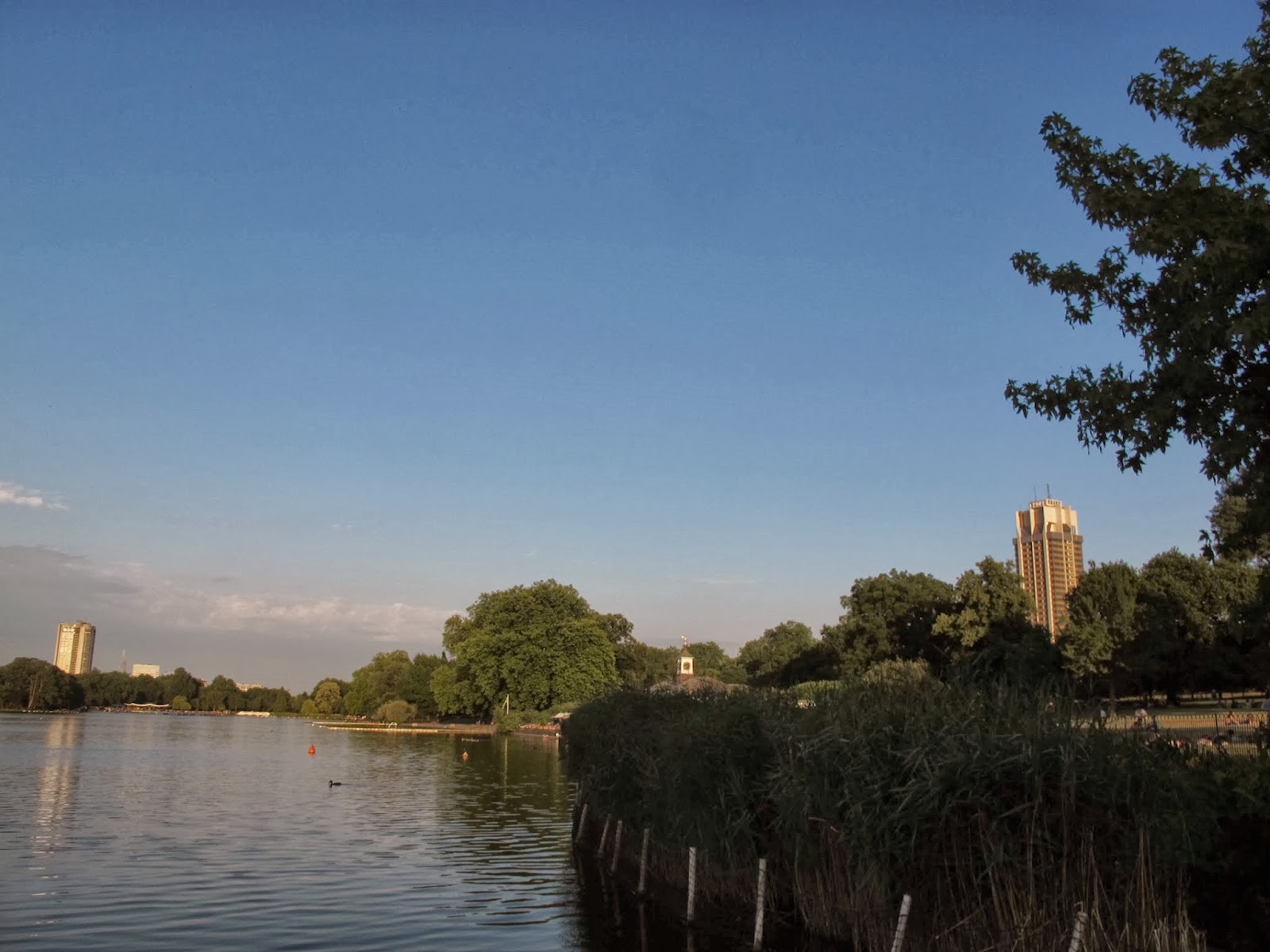
Hyde Park sits just a few miles west of the increasingly carbuncled crown of the City of London. While City's medieval streets burst with more and larger office towers, to the west lies the pastorial idyll, London's leaf Elysian field.

It's surrounded mostly by mannered quarters arranged in terrace rows powder-white town-homes. Protected by legal restrictions, the rooflines of Belgravia, Mayfair, and Kensington cannot be altered. In contrast to the spider-limbed tower cranes frenetically assembling steel plate skeletons over the City, the skyrocketing change to Westminster's property is in its value, not its outward appearance.


However, Hyde Park is not without its highrises. Before the era of sight lines making headlines and nicknames for buildings, London was a postwar city in need of reconstruction with fewer rules on shadow-casting, including in these aristocratic arrondissments.

The gimmicky shapes and narcissism of east London's thicket of office blocks contrast the blander 1960-70 era towers across West London.
The skyline of Bayswater, on the north side of the Park, from Marble Arch to Queensway, is a semmingly-intentionally dull assembly of rectangles.
The Queen of the west London chess set might have to be the 1963 Hilton Hotel on Park Lane, a glass-and-cement tripod standing atop a rectangular base at the end of Curzon Street. It should also be the Queen of this game board because the real Queen reportedly hates it and has never gone there in its fifty years.


Nearby Knightsbridge, now more than ever a metonym for disgustingly rich plutocrats burning immense amounts of money as a spectator sport, looks low key from the lawn, with only the top levels of the notorious One Hyde Park visible over leaf line.


Much more noticeable is the corpulently rotund Sheraton hotel, the robot that ruined Lowndes Square. Its resemblance to R2D2 is enhanced by its brutalist, bug-eyed bay-window pattern. If this wasn't rude enough to its terrace-house neighbors, the base of the building, which houses a casino, looks like a series of temporary partitions to cover the construction of a real lobby. But of course none of the ground-level mess is visible from lovely Hyde Park, where it peaks out above the plane trees, as if on reconnaissance.


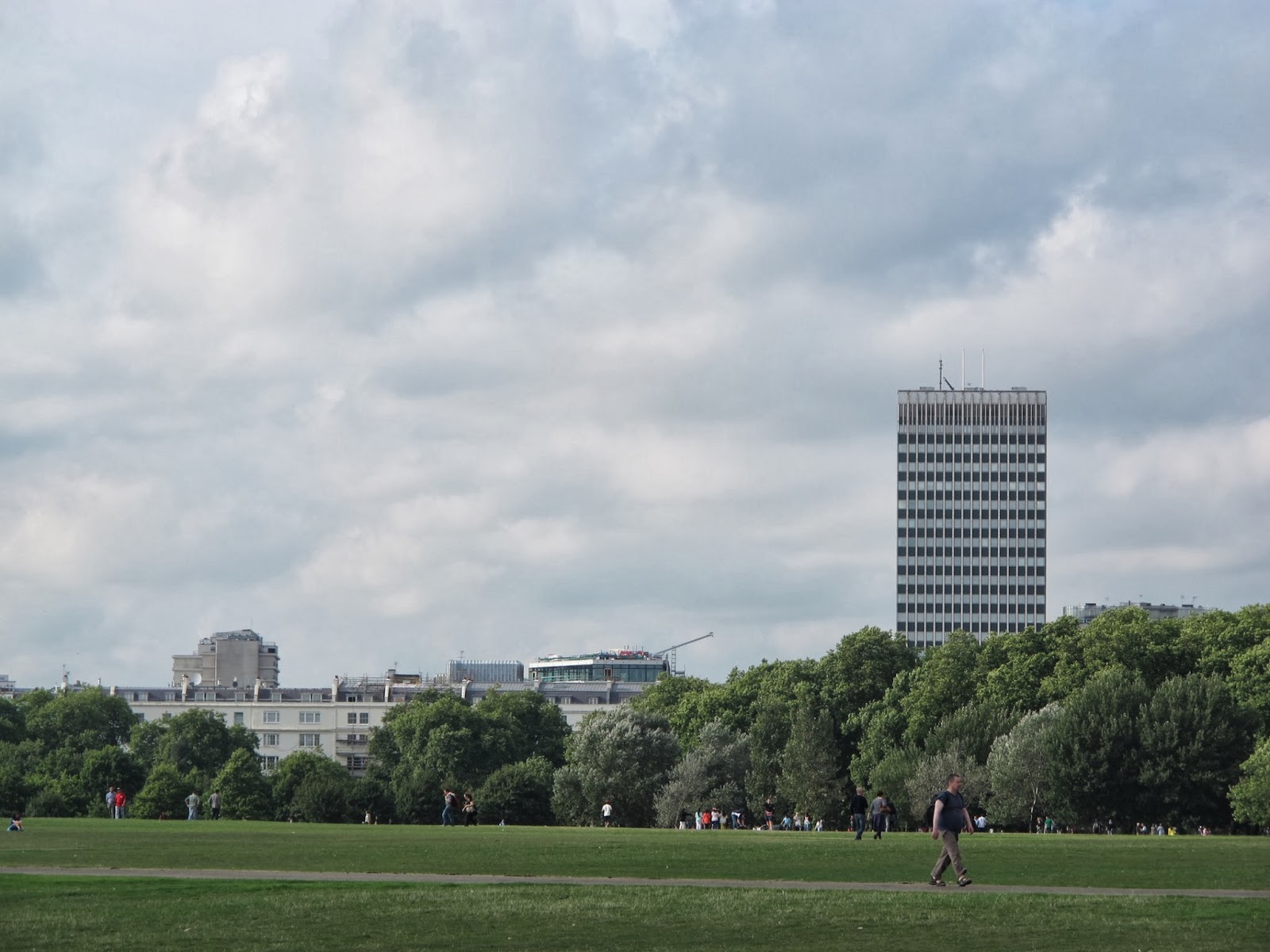
Lastly, the King of Knightsbridge has to be the totally unbelievable Household Calvary Barracks, the tallest and strangest building in West London. Non-Brits might question why household calvary even exist for in the era of the skyscraper, and imagining horse guards in a high-rise on the edge of historic, high-priced homes might require further explanation.


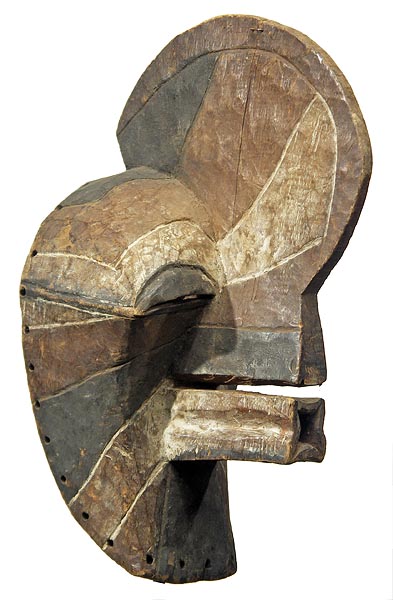
Wedged between the Park and the traffic of the Knightsbridge artery, this vertical dormitory wins the crown for best headgear, as the building's concrete posts flare into a finned helmet, the metallic roof sloping to a slim visor at the roofline, almost recalling the elements of an African Songye mask.

Widely hated, Basil Spence's 1970 masterpiece might be reborn as Two Hyde Park, as the MoD is looking to sell the 33-story tower for around £500,000,000.


In the current skyscraper boom, there have been repeated lamentations that London's skyline is being ruined. In earlier years, before the City's horizon was blotted out by cartoonish cutouts, the argument that London is not a high-rise city was even asserted.  Like its untouchable acres of terraced houses, London's panoramas and vistas have been treated as delicate, endangered, in need of protection and legislation. This argument convincingly impugns the bombastic buildingscape which continues to grow east of St. Paul's, but conveniently ignores that London has comfortably featured large buildings in its most celebrated areas for half a century or more. 


Invasions like the Household Calvary could not get planning permission today, for better or worse. What was allowed to go up all across London in earlier decades, from Tower 42 to Trellik, have been neither widely admired or thoughtfully contextual, and this might be viewed not simply as a series of mistakes but as as possibility of a more realistic metropolis. West London especially, with its few tall buildings spaced around an enormous park, shows how London is treated as a mythical rural village but acts as any other dense city, home to big ugly blocks up against pretty, historic buildings. 

Saturday, September 7, 2013

Satellit, Schlagzeilen lesen


While I'm anxious to move on geographically from the last few posts about Nairobi, as well as received as they have been (thanks to everyone who read and shared the last few posts). But I did want to post on a particular development near Nairobi that has been on my to-write list of this blog since very early on, and which, before I could get to it,  "has made the rounds" on the internet, as is the contemporary phrasing.

[The Atlantic Cities blog is really something of the Walmart of Architecture Blogs. It's the clearest example in this corner of the internet just how different and more corporate blogging is, in the barely half-decade since the medium of the blog became common. The once-revered Atlantic magazine, in its post-print plans, seems more intent on catching hourly page-views than the slower-paced, higher-intellect journalism that its paper version pioneered in an earlier century.]


Inspired by his visit to Silicon Valley in the United States, the home of the U.S. high-tech industry, [Information Minister] Ndemo says the project aims to attract international investors who either cannot find space in overcrowded downtown Nairobi, or who cannot find buildings that meet their standards.  
 "Kenya's $7bn Technopolis," a new development planned 60km southeast of the Kenyan capital as part of the government's "Vision 2030," seeks to pump up GDP growth to 10% per year and create hundreds of thousands of jobs, and, to hear the marketing video, transform Kenya and Africa, namely by inventing an East African Silicon Valley outside of Nairobi, thereby making Kenya a global hub for IT and call centers. Ground-breaking was delayed several times, but is apparently underway. Here is the promotion video:


Konza, and the other satellite instant cities which are springing up across Africa, manifest the vanguard financial forces that have arrived on the continent, viewing Africa as the final outpost for growth-busting capitalism, and replicate the collusional model of state-facilitated, investor-and-debt-sponsored property-development which occurs elsewhere. 
These satellite cities hope to tackle two different aspects: accommodating urbanization and creating modern cities to complement development. They also seek to embrace their respective countries' advantages. For instance, Konza City in Nairobi, Kenya is a multi-billion dollar ICT city park. The Kenyan Permanent Secretary in the Ministry of Information and Communication expects Konza City to be Africa’s home of computerization, the equivalent of Silicon Valley in California, complete with skyscrapers, business centers, international schools and hospitals. It is no secret that Nairobi aspires to be the technology hub of East Africa. 
 The main parameters of Konza and Africa's other satellite districts are the same: a vast zone on the edge of the existing metropolis, transformed in the glossy renderings of business parks and condo towers, and breezy copy, serving as both real-estate boosterism and political spin, boasting the number of jobs, the number of square miles or hectares under transformation, the population in some far-off decade, the square footage of various purposes, above all class-A office space, the number of luxury hotel rooms, the number of condos, and of course the height of the tallest, iconic building.
Satellite cities are driven by business developers and as a result are being promoted by businesses and are consequently labeled as the future of well-organized urban spaces.
It is the banality of these dual replications that is repellently fascinating: the outmoded, debt-lead financial schemes (and the corruption that pervades such machines), realized through outmoded, unsustainable design schemes (as much as they are marketed as "green").


These new cities are openly being sold as flight from the old city center, which, with its dated buildings and poor people, is deemed unsuitable for contemporary lifestyles and business. It is central Nairobi as downtown Detroit. The internet-technology-as-economic-savior trope, while no less realistic, is only slightly less out of date. Under such narratives, it may be therefore less surprising but no less outrageous,  when local Kenyan press reveals that the government has sought to specifically outlaw slums within 10-km of Konza, a sweeping radius that is experiencing rampant property speculation among the elites. The proposed high-speed rail line, non-stop from Konza to Nairobi's international airport, bypassing any actual interaction the people or economy outside of the gated city, is more evidence of the logic that governs this development.


Aesthetically, what is perhaps the most ridiculous aspect of Konza City's marketing package is also its most revealing: the random appearance of Dubai's twin Emirates towers at the town center and, even more hilariously, the presence of Montreal's Olympic Stadium as Konza's sports facility. The fiscal catastrophe of the Montreal Olympics is forgotten in favor of the futuristic icon of recreation and revenue-generation via professional sports and sport-event hosting facilities; and there is simply no higher nirvana in dreams developing-world urban growth than Dubai. While the prominent placement of copies of other cities buildings in the renderings of Konza may simply be the result of lazy draughting-by-Google-image-search, but the symbolism is inadvertently perfect.


The Konza e-city will come complete with skyscrapers, hotels, international schools, a world-class hospital, a financial district, a high-speed mass transport system and integrated infrastructure. It will put the capital city’s CBD completely in the shade as it will come with smart fully-computerised buildings, thoroughfares and other infrastructure. Coming on top of other Vision 2030 infrastructure and ICT rollouts, Konza e-city will be the jewel in the crown of a new and completely transformed Kenya.
It has the potential to create 100,000 jobs, the vast majority of them in the Business Process Outsourcing (BPO) sector. The comparison with India in the FT headline story on Kenya is indeed a suggestion that Konza e-city could well become a global call centre, placing Kenya in the big leagues of the digital world economy.  --quoted from this website


The startling, dispiriting realization at Konza and elsewhere is, that the final frontiers of human economic and community development are being radically realized as sloppy copies of the dysfunctional, and discredited spatial and financial structures of the most unsustainable cities elsewhere. If Dubai and Phoenix, Atlanta and Abu Dhabi, Dallas and Doha are seen as ecological and social catastrophes, then it is all the more dispiriting to find that dozens, perhaps hundreds of cities are rushing to be made in their image, right down to the shapes of their skylines.


Monday, September 17, 2012

Frankfurt und Anderswo


FRANKFURT AM MAIN.

Journalists have employed the term "Mainhattan"regularly over the last two decades to describe Frankfurt, ostensibly due its thicket of high-rise financial towers that has risen across the west-end of the city. Frankfurt's American-style "downtown" skyline, began rising in the mid-1970s, never 'exploding' so much as growing bit by bit, as it does today. Frankfurt looked remarkably different from any other European city.

Although somewhat renown in the recent past as the most substantial skyline of continental Europe, this hyperbolic moniker's impact has diminished as European skyscrapers became less unusual, and especially as European skyscrapers have become more common, such as post-1990s Rotterdam or Warsaw, much less when considered against the hundreds of formally-flat cityscapes from Doha to Shenzhen which today appear as a shimmering walls of highrises.


Top: southeastern Frankfurt: The Romer, the Main Plaza, the ECB Tower
Bottom: Central-East Frankfurt, the Zeil Hochhaus and Jumeirah Hotel at Left, the ECB at far right.
©2012 Bauzeitgeist.


Not that anyone besides journalists and architectural enthusiasts have ever used the term "Mainhattan," But to at any point call Frankfurt's small cluster of not-particularly-tall buildings a peer to New York's miles-wide skyline was always ridiculously overblown. A more appropriate, if less cosmopolitan, reference would be to a similarly-sized and shaped American city. Frankfurt's skyline was never more substantial or impressive than the elevation of downtown Pittsburgh or Nashville.

 Left: Messeturm, Frankfurt, by Helmut Jahn, 1990.
Right: NationsBank, Atlanta, by Roche Dinkeloo, 1992.
Both images via Wikipedia Commons.

If the comparison should have always been more Mainneapolis than Mainhattan, then at least, in those years, American economic might was still the pinnacle of achievement, worthy of imitation and adoption. Architecturally, this is particularly manifest of that lengthy golden age of post-unification, pre-Euro Germany, when an optimistic Frankfurt embraced corporate American postmodernism as the face of its increasingly intra- and intercontinental financial district.

What had begun as a few German-designed glass boxes pre-1989 was joined by colorful, whimsical bank buildings rising up around the Bahnhofvertiel, of the same generation as the neoclassical office towers that became the tallest buildings in many American cities from Cleveland to Charlotte in the 1990s, as both continents reached the apex of transatlantic corporatism.


Left: Westend Tower, by Kohn Penderson Fox, 1993. Photo ©2003 Bauzeitgeist.
Right: US Bancorp, Minneapolis, by Pei Cobb 1992. Image via Wikipedia.


This resulted in such towers as the pyramid-capped Messeturm, which would not look out of place in Atlanta's midtown; KPF's Westend Tower, whose curving-white brise-soliel was, its hard to comprehend now, seen as daring when it was completed, spawned identical hundreds across the North America from Miami to Vancouver, later spreading to other continents. Yet Westend Tower completed a year after Pei Cobb's US Bancorp in Minneapolis opened in 1992, crowned with a similar fan.

Lastly, and while not copying so closely an particular tropes of American post-modernism, the strangely-crowned Trianon Tower has no closer kin than the Centerpoint Energy Plaza in Houston.


Top: Centerpoint Energy Plaza, Houston, with its 1996 crown. ©2003 Bauzeitgeist
 Bottom: Trianon, Frankfurt, built 1999. ©2003-2012 Bauzeitgeist

At least a few in Frankfurt seemed to take the city's gothamist nickname somewhat seriously. In looking at the architectural record, this is best supported by the extremely curious Main Plaza, on the south bank of the Main, a hotel tower which seems to directly copy Raymond Hood's 1924 Art Deco American Radiator Building in midtown Manhattan (and Chicago's Tribune Tower), which itself was inspired by gothic architecture: a transatlantic style boomerang; post-modern irony at its pinnacle.


Top: Main Plaza, Frankfurt, 2001. Photo @2012 Bauzeitgeist.
Bottom: American Radiator Building, 33rd Street, New York, by Raymond Hood, 1924.
Image via Wikipedia Commons.


On a recent visit to Frankfurt, specifically to view the exhibit at the DAM, two prominent additions to Frankfurt skyline show that Frankfurt's skyscraping continues on, but perhaps with new influences and inspirations. In the center of the city, just off the Zeil, the city's wide fußgangerzone, rises the stylish Jumeirah Hotel, the newest outpost of the Dubai-based luxury hotel chain.


Its highly-contemporary exterior, characterized by jagging and wiggling elevations and punched by stochastic slits of windows, employs two popular devices from the contemporary architecture kit of the last few years, which can be found in the United States as much as anywhere (such as the "curving" and "sexy" Roosevelt University Tower which has invaded Chicago's historic Michigan Avenue district. The Jumeriah takes the same jagged shape, while also being reminiscent of the Hilton Hotel in Houston.


 Jumeirah Frankfurt and the Zeil Hochhaus.  ©2012 Bauzeitgeist.

This new developed is adjacent to the historic Thurn und Taxis Palais, but the hotel does not utilize the older building for a substantial street presence or spacious lobby. Instead, a narrow corridor with lectern-sized front desks opens directly onto the ground floor of one the bustling, glittery, mid-market malls which dominate the pedestrian shopping precinct. While linking luxury towers to malls is a standard real estate cocktail around the world, its a formula which is waning in North America at the same time it is worshipped in Arabia, and it seems telling that luxury was conveyed in this particularly non-European fashion.

Hilton Hotel Houston ©2003 Bauzeitgeist.

The Jumeirah, part of the  Zeil Hochhaus I & II phase of the Palais Quartiel development, might therefore be best described as a Gulf hotel in a German city, programmatically, stylistically, and architecturally following the bland luxury development formula that is applied in cities everywhere nowadays.

What is therefore more remarkable both in scale and its peripheral location is the substantial European Center Bank Headquarters at the southeastern limit of the city center, at the Großmarkthalle, a vegetable market which also played an ignominious role in assembling deportees from the city during the Holocaust.


This huge complex rises outside the normally skyscraper-belt, and it is interesting to speculate on the meaning and impact of the ECB's new location, whether this move from the Bahnhofverteil to the Großmarkt marks Frankfurt's shift from its City to its Canary Wharf, especially when viewing central Frankfurt's distant cluster of skyscrapers from the riverfront, docklands-like construction site around the Großmarkthalle. German cities never shielded their centers from development like Paris, but its most skyscraper-strewn city may yet get its La Defense.


Frankfurt's Docklands: The Großmarkthalle site at a bend in the river, 
southeast of the city's center, with the existing financial district several miles distant. 
The Main Plaza is at mid-center left, behind the bridge. 
See Google Earth image at top of post to note how the oxbow bend of the Main echoes the Thames at the Docklands.
Above Image via Wikipedia.

The huge ECB premises, with twin towers pivoting toward each other at an angle connected by multiple, cantilevering sky-bridges between, is dashingly contemporary in its styling. This is the latest iteration of an emerging kinship of such twin-towers, most especially such supersleek developments as the World Trade Centre in Bahrain, which has been mentioned in this blog a few times before.

Bahrain's World Trade Center, c.2008. Image via Inhabitat.


A fable for our times, the ECB has been working on a substantial new building throughout a crisis which now impugns the very concept of a centralized Europe, which has lead no less than George Soros that Germany should either save or leave the Euro. 


While last week's announcement that the ECB development would be overbudget by 41% was met with exasperated derision and humor, that the ECB seems to be emulating new financial capitals much farther to the southeast from its old offices, the sovereign-wealth-fund federation between Doha and Abu Dhabi, with a glittering, Gulf-like financial center. Rather than recall a more rational and socially beneficial heritage of finance, the ECB's architecture reflects out to the flashy new centers of money.


Frankfurt has never been a large city, or at least, never larger by area or population than other German or European cities. Its markets and banks, the vast convention halls of the Messe, and its busy, centrally-positioned airport have made Frankfurt a global city. However, this isn't the same as being cosmopolitan, in the same way that its important book fair is not make Frankfurt a center for literature. As stated in the Guardian earlier this month, even as it has continued to persevere as a global banking center, Frankfurt has never grown into a metropolis.

Despite its under-rated museums and its pleasant quality of life, Frankfurt is only a cross-roads of trade and transport, without the overlay of romance and art that defines London or New York. Its central district holds the late-evening routes of lonely foreign businessmen, not the storied streets of a world capital. Frankfurt may so badly wish to be compared to these sophisticated cities, but it continues to grow by building upward with skyscrapers evoke those duller, more commonplace business districts that are its true peers.

Thursday, July 26, 2012

Land aus Feuer und Hochhäuser

CNN International has a particular roster of advertisements. Most likely due to its widespread, worldly audience as one of the planet's principal satellite news networks, for years CNN has featured commercials not for cars or canned goods but for countries. A random collection from recent broadcasting includes tourism and promotional ads featuring Taiwan, Singapore, Qatar, and Montenegro.

This leads to some unusual advertising arrangements. "Arrangements" seems the correct terms as the network not only airs commercials during programming breaks, but also has embarked on favorable, sponsored coverage on the economic and investment climate of sovereign states, a somewhat behind-the-curtains practice which was revealed by Max Fisher in the Atlantic in the last week.

The Atlantic article specifically called out some unusual editorial arrangements in which former or even current regime officials in Kazakhstan were interviewed as experts and commentators on Kazakhstan's attractiveness to foreign investors.

Even before this controversy surfaced, I had wanted to post two ads in particular here: one for Azerbaijan and one for Astana, capital of Kazakhstan. Both feature recently-completed contemporary architecture quite prominently.

The Azerbaijani advert is a more straightforward pitch to the business traveler: zip to Azerbaijan for the day on your Citation, seal an investment opportunity by sunset. While there is some of footage of the sandstone buildings of the old city of Baku, that capital's newest addition, the Flame Towers, are unmissable: the towers shown no less than 5 times, and form the backdrop of the conclusion of the ad. As the names make obvious, the towers are supposed to resemble flickering fire, a reference to the country's Zoroastrian fire-worshipping heritage.

However, with their blue-green glass slimming upwards, the resemblance to the Financial Harbor Towers in Bahrain, (previously blogged about here) although likely unintentional, is unmistakable, and the effect of booming Baku having a Bahrain- or Dubai-style skyscraper set was surely part of the allure of their addition to the skyline.


The second advert shows the instant-city-on-the-steppes, Astana, the circa 1997 capital of Kazakhstan, an immense country which boasts even more extraction-action than Azerbaijan. The ad is similarly storyboarded if slightly less overtly financial. It is mainly some cloudless vistas of the capital's glistening new towers, aligned on what is surely, during the long sub-Siberian winter, a frigidly-windswept central promenade: apparently called the Green Water Boulevard or Shining Path, which is the central part of the city's master plan, designed by Kisho Kurokawa.

The camera rests as 0:25 on Norman Foster's Khan Shatyr Entertainment Center, an indoor beach resort and shopping center (again, that winter), but the footage doesn't show Foster's other Astana edifice, the pyramidal Palace of Peace and Reconciliation, perhaps because that slightly older structure has less permanent use (This 2010 Blueprint Magazine article thoroughly covers the story of Foster in Kazakhstan.


I've posted previously about Astana, and the Kazakhstani government's use of architecture to visually promote trade. The prominence of contemporary architecture, putting its "iconic" these emerging economies as worthy business destinations, is neither a particularly new or unique use of architecture. In fact, as much as it boasts of where the global growth seems to be these days, it also evinces the come-from-behind status of these investment frontiers, in comparison to more established markets. Its hard imagine that places such as Milan or Los Angeles would either need television commercials or have them feature recently-constructed buildings to reassure potential investors; but then American and European cities hardly have the budgets to buy spots on CNN, and the government would have to answer to its own constituents if its spent taxpayer money on a TV spot. The leaders of Azerbaijan and Kazakhstan don't have to worry about that.

Sunday, July 8, 2012

Shardenfreude

 Around 40 architectural landmarks are arranged to make a heart. 
If the Shard is among them, it is the small, dark pylon at the bottom, underneath
 the Tower Bridge, to the left of Nelson's column. The London Eye, the Gherkin, 
Natwest Tower and even the Carbuncle Cup-winning Strata are more prominent. 

Liebt niemand die Shard? 

It was actually not difficult to find favorable words for London's newest, tallest tower in the press leading up to last week's opening, but most of the platitudes emanate from the building's builders, backers, and its architect. 

The opening ceremony, in which the Shard had frickin' laser beams coming out of its head, was actually a quite fitting metaphor for the building: somewhat cheesy, ostentatious, unoriginal, self-important, and unable to be avoided even far across London.

The Shard's baptism by beacons occurred in the same week as the "LIE-BOR" scandal oozed out of London and around the world, and the building's constant honorific--the tallest building in Europe-- is spoken in a period when the very word "Europe" is a source of anxiety in a way unimaginable a decade ago. Similarly, a metropolis that had long-since sold its Georgian squares to Kuwaitis, and its department stores to Egyptians, and allowed the Saudis, Russians, Qataris and others to own and build so much of the city, now see this foreign control as endless and out of control. It is a tower of luxury in a city and country divided by wealth and privilege.

And yet, here it is, London's newest tower, meant to be a towering symbol of London's continued relevance, renewal, and righteousness. Yet a comparison of the completion of the Shard with the arrival of the Gherkin less than a decade ago reveals two completely different receptions. The juxtaposition is an apt one: the Gherkin was the most prominent addition to London's skyline in years, and furthermore is just more glass-enclosed office space for foreign financial firms, like the Shard. Yet the very different regard for these two towers is remarkable.

The Gherkin, firstly, did not rise in a controversial area: The Gherkin rose in the existing business district, among a shiny cluster of financial office blocks that had walled off the City since the 1970s. It was not even the tallest spire among these, whereas the Shard looms alone over the streets of Southwark.

Even before it was finished in 2004, the Swiss Re: Headquarters was granted a giggle-inducting name of an edible delight that doubles as an erotic euphemism (although its true that some people don't regard the name as a mark of admiration and it is certainly true that funny nicknames are not given to London skyscrapers purely out of affection). And yet the Shard is not a nickname by the public and press: it is the official name of the building, a central aspect of its polished marketing. And while the Gherkin brings to mind salacious and sundry associations, a Shard of glass comes from the violent cracking of a pane, a shattering: its broken pieces sharp and skin-slicing: a horror-movie weapon, not a silly sexual slang. 

If the appellation is just unimportant, the origin story is not, and the Gherkin is more British than the Shard will ever be. Designed by a British architect, a Lord no less (in a slightly more innocent, pre-MP expenses and pre-phone hacking era which had less disdain for the wealthy and more regard for Parliament). Even its address, St. Mary's Axe, was atavistic and adorable, suggesting both the christian shrines of the pre-modern City and the quirky serendipity of English geography (what other nation names an alley an axe?).

Finally, its swirling strips of climate-controlling rhomboid glass curtain recall the lead-paneled windows of Tudor timber-frames that the district once had, bridging its most futuristic feature with the ancient heritage of the area: the Gherkin managed to be both forward-looking yet quintessentially British (whereas the Shard has been accused of being not just Qatari but North Korean).

In this patriotic fable, the Gherkin embodied the core sentiment of London's fin-de-siecle self-satisfactory myth and self-congratulatory mood that swept over the city: London, ancient, creaking, damp, and increasingly diminutive, had remained atop the rankings of the most important, relevant, modern, and cool cities in the world. Indeed, London, long-past its prime as the capital of empire, had remained the center of the world.


Online Adverts for Iceland Express airlines, c.2009. 
London is shown by Westminster Cathedral, the Tower, Big Ben, St. Paul's,
 and most prominently the London Eye and the Gherkin.


It was that the Gherkin, along with its earlier contemporary, the London Eye, a similarly-circular and equally-visible contemporary, that were the celebrated as symbols of this triumph. Both were cute: a plump priapsism of late-cool Brittania exuberance, with the Eye as its sister iteration, a childlike-carnival ride over the Thames, just opposite Westminster.


The Vivian Westwood Christmas display window at Selfridge's Department Store, 
Oxford Street, London, December 2005. 
The London Eye, The Monument, St. Paul's Cathedral, 
the BT/Post Office Tower, and Charing Cross are all discernible. ©2005 Bauzeitgeist.

Landmarks they became, and symbols they remain. The Gherkin and the Eye took their place among the pantheon of London's architectural idols in print, posters, advertisements, and other media, joining its elders St. Paul, Big Ben, the Monument, and Tower Bridge. The Gherkin popped up across the visual landscape of London in those years, and still does today, in the constant graphic representation of the skyline, and by extension, a city and country enjoying a renaissance of its own ingenuity.

 Above: An advert on a tube escalator, December 2005, showing 
St. Paul's, the Gherkin, and the Tower Bridge. 

Above: Great Southwest Trains billboard at Waterloo Station, February 2006. 
The skyline shows the Houses of Parliament, Westminster, Nelsons' column, 
the Eros fountain, St. Paul's, the Monument, the Gherkin, the London Eye, and Tower Bridge. 

 Above: A commemorative Kitkat bar box, c.2010. 
St. Paul's, One Canada Wharf, and The Gherkin stand for London.

Above: two posters for the 2007 Tour de France in London. 
The Gherkin is the most prominent landmark shown, 
but Lloyds of London makes an appearance.

Quite awkwardly, the Shard has yet to receive such graphic laurels. The supertall was deliberately crafted to be an icon of the city, yet thus far there are hardly any outlines of London's skyline, whether within the UK or elsewhere, that include it.

A mural on 5th Avenue, New York, in January 2012, advertising 
the opening of a Ted Baker clothing emporium. Robot mannequins 
trim a hedgerow into the shapes of London landmarks: 
Lord Nelson, Buckingham Palace, the London Eye, St. Paul's Big Ben, 
Westminster Cathedral, Eros, Tower Bridge, and the Gherkin.

Even the hideously unloved Natwest Tower, the thoughtless trifecta of Canary Wharf, the heinously bizarre city hall helmet, and the long-loathed and utterly defunct BT Tower appear more often (interestingly, the 3-year old Heron Tower, officially the city's tallest but with even less to distinguish itself than the drab Natwest Tower, has not been adopted, either).But it is constantly the Gherkin and the Eye that are purposefully included to indicate the contemporary city.


Above: ©Artist unknown, c.2009 via this tumblr
 Both use the ensemble of St. Paul's 
the Gherkin, and Natwest to represent London.

Compared to the much less frequent examples incorporating the Shard:
Albert Hall and Wembley Stadium, alongside
The Gherkin, the London Eye, Big Ben and Tower Bridge. The Shard is also prominent.


Above: The Londonist, a widely-read events blog, is one of the first and few to incorporate the Shard 
into its logo, alongside Big Ben, the Eye, the Gherkin and St. Paul's dome.

The lack of acceptance of the Shard is especially remarkable in the year 2012, when London and the rest of Britain, were are told, will be renewed via the magic of the Olympics. The Shard already has an awkward relationship to this spectacle, in that it actually has nothing to do with the Olympics at all, but is being finished in the same year and that the Olympic games will occur in the same city. Last week's laser-show opening was a kickoff of the Olympics, just weeks away, but one that didn't make reference to the games at all.


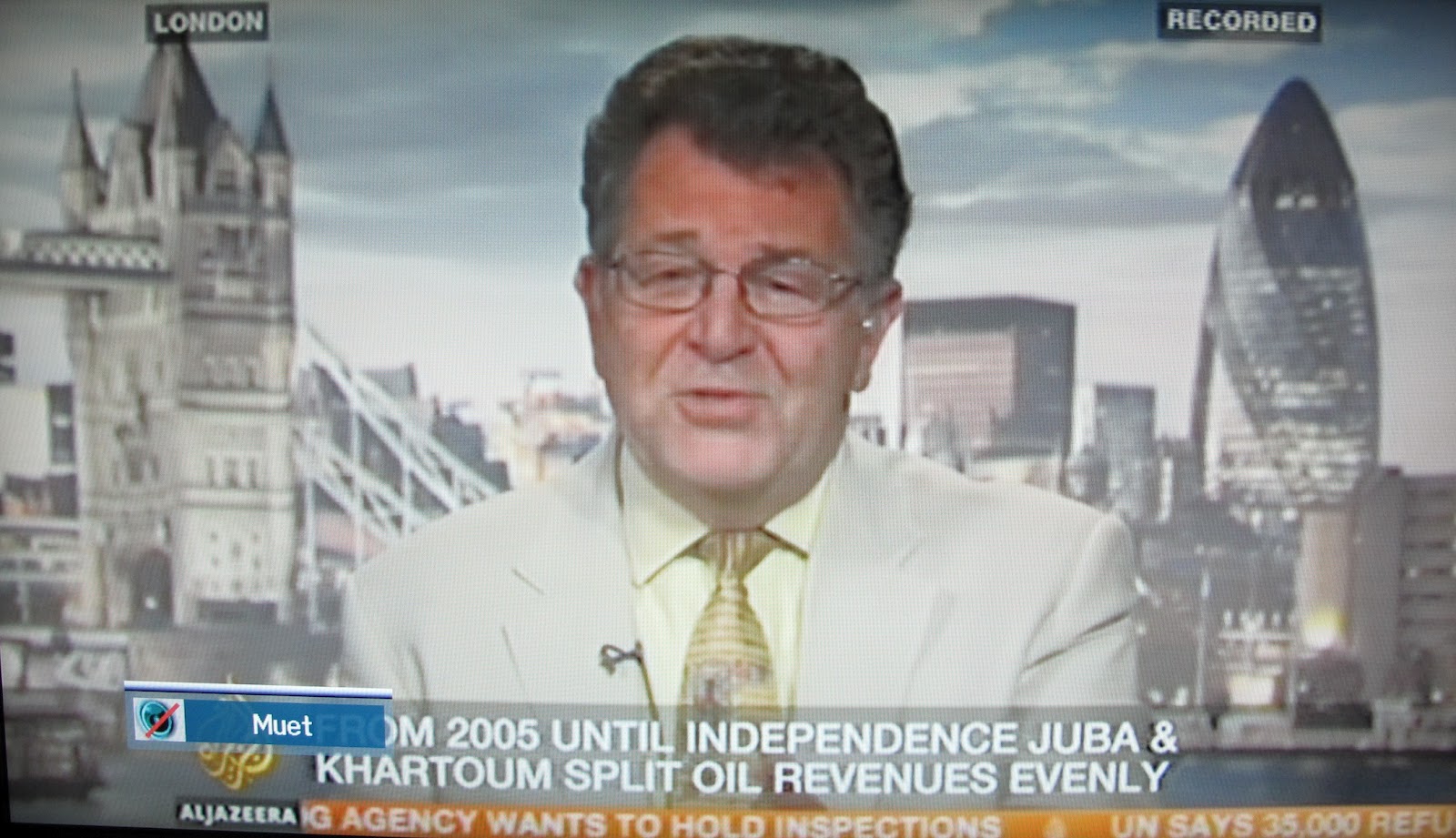
 The Reporting from London, 2011. 
Top: Al Jazeera shows the Gherkin and the Tower Bridge. 
Above: SkyNews from the London Stock Exchange, showing St. Paul's, 
Tower 42, the Gherkin, and the towers of Canary Wharf.

The games have ratcheted up the provision of graphic representations of the city, even among those media groups which do not have official Olympic broadcasting, such as CNN and the BBC, but also by NBC Universal:

Above: CNNGo! celebrates London, 2012.The skyline is clearly made up of the London Eye, 
Westminster Cathedral and Big Ben, and the Tower Bridge, 
with the Gherkin and what may be the helmut-shaped city Hall on the underside.
Below: NBC's promotional trailer for the Summer Olympics. 
The opening sequence shows Big Ben, the London Eye, Buckingham Palace and the Gherkin, but not the Shard.  


All of these 2012-specific spots pay respects to the Gherkin and the Eye, along with the classic tourist landmarks such as Big Ben, Tower Bridge and St. Paul's, but none of them show the Shard, not even the BBC's non-Olympic Olympic extravaganza: "London Calling, The City of 2012" whose title animation shows One Canada Wharf and even the forever-loathed Centre Pointe, but does not include this year's debut tower:


The uplifting television advert, with panoramas of the Thames and long shots of a dozen London landmarks, especially St. Paul's and the London eye, shows the Shard only for a split-second in the background of a night vista:


Surely the Shard will be more widely depicted over time, when its presence is more in harmony with the mood of its city. Its not like its going anywhere, and in the future its initial associations will wear away. But it is this lack of inclusion thus far, the lack of celebration around its arrival, reveals that it is so disdained as to make its artistic ambassadors act as if it wasn't there.

Big brash buildings often take time fit in, especially in older, historic cities which fret over threats to the appearance of its ancient cityscape. But the faint praise for Piano's feat is due to more than just an uneasy reaction to this enormous erection's sun- and landmark-view blocking height or mass. Skyscrapers are landmarks, and landmarks are symbols, which by definition stand for something, and the creator cannot always declare the definitions. For an architectural gesture that was always designed to be an icon, it is the very fact that it is a symbol, and what it is a symbol of, that has made the Shard so unwelcome.